Climate Change Encroaches On Swiss Alpine Shepherding
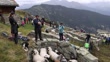
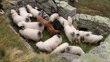
BELALP, SWITZERLAND - SEPTEMBER 8: Stefan Mooser, who works shifts at a pharmaceutical plant and raises sheep part-time, looks at his Valais Blacknose sheep penned in a stone enclosure dating back to the Middle Ages called a Färricha at the conclusion of the annual “Schäful� sheep drive on September 8, 2024 in Belalp, Switzerland. The sheep have spent the summer grazing on high alpine meadows in the Aletschji region above the Oberaletsch and Grosser Aletsch glaciers. During the festive “Schäful,� shepherds and sheepherders gather the scattered sheep over several days and lead them to the village of Belalp, where owners take them back, either for slaughter or for winter breeding. Climate change, while it has led to increased amounts of grass for grazing, is also creating complications for the shepherds. The Oberaletsch glacier that once provided an easy means of crossing a gorge along the route has shrunk and receded, leading local authorities to blast a path into the rockface and build a suspension bridge already in the 1970s. More recently, prolonged durations of weather that is either too wet or too dry are increasing. Snow is now falling later in the year and melting later in the spring, shifting the summer grazing season. And due to the warming climate, vegetation unsuitable for the sheep is taking root at higher altitudes, pushing into the sheep’s meadows. The Swiss government, which sees alpine landscapes and traditions as intrinsic to the country’s national and cultural identity, subsidizes alpine farming heavily. (Footage by Sean Gallup/Getty Images)



PURCHASE A LICENSE
Get personalized pricing by telling us when, where, and how you want to use this asset.
DETAILS
Credit:
Editorial #:
2171151334
Collection:
Getty Images News Video
Date created:
September 08, 2024
Upload date:
License type:
Rights-ready
Release info:
Not released.ÌýMore information
Clip length:
00:00:14:00
Location:
Belalp, Valais, Switzerland
Mastered to:
MPEG-4 8-bit H.264 4K 3840x2160 25p
Source:
Getty Images News Video
Object name:
240908-schaful07
- 4K Resolution,
- Agriculture,
- Animal,
- Animal Themes,
- Business Finance and Industry,
- Climate Change,
- Color Image,
- Cultures,
- Decisions,
- Economy,
- Enclosure,
- Environment,
- Environmental Damage,
- Environmental Issues,
- Film - Moving Image,
- Finance and Economy,
- HD Format,
- Horizontal,
- Human Interest,
- Nature,
- Raw Footage,
- Real Time Video,
- Sheep,
- Social Issues,
- Switzerland,
- Valais Blacknose,
- Valais Canton,
- Video with Sound,